Why cedar is a problem in Texas
Ashe juniper, what most of us call cedar, drinks more groundwater than almost any native tree. A mature cedar can pull thirty-plus gallons a day. Multiply that across a cedar-choked pasture and you're looking at wells dropping, springs drying up, and native grasses losing ground. On top of that, it's the biggest source of cedar fever allergies in North Texas every winter. For the deep dive on how cedar behaves and why most removal methods fail, see our Ashe juniper removal guide.
The removal method that actually works
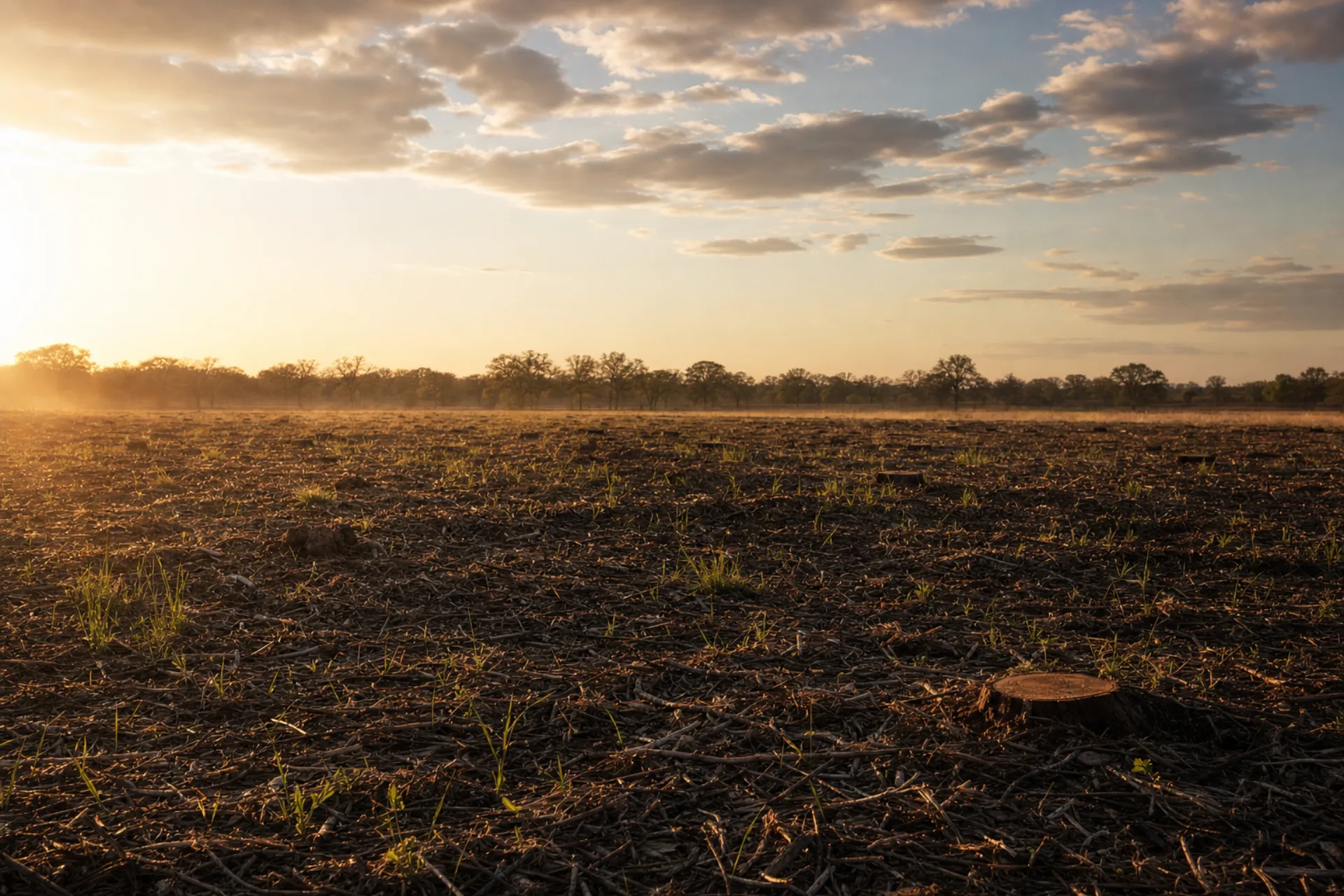
Pushing cedar over with a dozer leaves the root crown intact, and it grows right back from the stump. The only reliable way to kill it is to grind the tree out below the crown, the woody knot at ground level where the trunk meets the roots. We run a mulcher or grinder specifically for this, and on post-job follow-up, regrowth is minimal to none.
What you get back
More grass. More groundwater recharge. Better line-of-sight across the property. Fewer ticks, because cedar thickets are prime habitat. And for most of our clients in January, noticeably less cedar fever. You can't eliminate it, but cutting the trees on your own land cuts the pollen load right around the house.
Combined with mulching
On most cedar jobs we pair removal with forestry mulching so the ground crowns come out, the trunks get ground in place, and the whole job finishes in one pass with no haul-off. The mulch feeds the soil and gives your pasture grass something to grow through. For ranches fighting both cedar and mesquite, we handle it as one pass so you're not paying for two mobilizations.